
If you’ve ever stood in a car park staring at a fresh dent or a long scrape down your door panel, you know that sinking feeling. Your mind starts racing: How much will this cost? Will the repair look factory-fresh or leave a visible patch? Can I even trust the shop I’m about to hand my keys to?
After years working alongside panel beaters, spray painters, and insurance assessors across Melbourne’s western suburbs, I can tell you the anxiety around Vehicle Body Repair Sunshine searches almost always comes down to one thing: people don’t know what a genuinely good repair looks like, so they can’t tell if they’re getting one.
This guide breaks down exactly what happens during a proper repair, how to spot quality workmanship, and what separates the average smash repairer from a shop that treats your car like it’s their own. Whether you’ve had a minor car park bingle or a significant collision, this is the information I wish every customer had before they walked through the door.
Sunshine and the surrounding western suburbs see a huge mix of driving conditions — tight strip-shopping car parks, busy arterial roads like the Western Ring Road, and plenty of stop-start traffic. That combination creates a lot of low-speed impacts: door dings, bumper scuffs, and mirror clips.
It also means local repair shops see repetitive damage patterns, which is actually a good thing. A shop that regularly handles Vehicle Smash Repairs Sunshine residents bring in has likely already fixed a dozen cars with the exact same issue as yours. That pattern recognition matters — it’s the difference between a technician guessing at a repair method and one who knows precisely how a particular bumper clip breaks or how a specific panel responds to paint-matching.
Getting Car Body Repair Sunshine work done locally also means faster turnaround, easier communication if something needs adjusting, and a shop that’s accountable to a community they’ll keep seeing at the shops or school pickup.
Not all damage is created equal, and the repair method should always match the type and severity of the damage — not the other way around.
Minor dents and dings These are usually caused by shopping trolleys, car doors, or hail. If the paint surface isn’t broken and the metal hasn’t stretched, this is often a candidate for paintless dent repair (more on that below).
Scratches and scuffs Range from light clear-coat scratches you can barely feel with a fingernail, to deep gouges that expose bare metal. Shallow scratches can sometimes be polished out; deeper ones need filler, primer, and a blended repaint.
Bumper damage Modern bumpers are plastic composite, designed to absorb impact. Cracks, tears, and deformation are common after low-speed collisions. Many can be repaired with specialised plastic welding rather than full replacement — a detail some shops skip because replacement parts are an easier upsell.
Structural or frame damage This is the serious end of the spectrum, usually from higher-speed collisions. It requires chassis alignment equipment and a technician who understands your vehicle’s specific structural tolerances. Never let anyone attempt this without proper measuring equipment — misaligned frames affect handling and crash safety in future accidents.
Paint damage and fading UV exposure, bird droppings, and tree sap all degrade paintwork over time. Restoration ranges from a cut-and-polish to a full respray, depending on how deep the damage sits.
This is where most people get it wrong — and I say that having watched customers make the same avoidable mistakes for years.
Ask about their quoting process. A reputable shop inspects the vehicle in person before quoting. Phone or photo-only quotes are convenient but often inaccurate, especially for damage that hides underlying issues like cracked brackets behind a bumper.
Check if they work directly with insurers. A shop experienced with insurance claims will manage the paperwork, provide compliant documentation, and know how to justify repair methods to an assessor. This saves you hours of back-and-forth.
Look for paint-matching technology. Factory paint codes aren’t always enough — cars fade unevenly with age and sun exposure. Ask whether they use a spectrophotometer or computerised colour-matching system rather than relying on the code alone.
Request examples of past work, ideally on a similar make or model. Photos of blended panel work tell you more than any sales pitch.
Ask about warranty. Genuine workshops stand behind their repairs with a written warranty on both paint and structural work. If a shop is vague about this, that’s a red flag.
If you’re comparing the Best Vehicle Body Repair Services in Sunshine, these five checks alone will filter out most of the shops that cut corners.
This is one of the most misunderstood parts of the industry.
Paintless Dent Repair (PDR) uses specialised tools to massage the metal back into shape from behind the panel, without disturbing the factory paint. It’s ideal for:
It’s faster, cheaper, and preserves the original factory finish — which matters for resale value.
Traditional body repair is necessary when:
A good technician will assess the damage and recommend PDR wherever it’s genuinely viable — not push a full repaint because it’s a bigger job. If a shop recommends a full respray for a shallow, paint-intact dent without explaining why PDR wasn’t an option, ask them to clarify.
It’s worth clarifying a common point of confusion. If you search “mechanic near me” after an accident, you’ll often land on general service centres — great for oil changes, brakes, and engine diagnostics, but not necessarily equipped for structural panel work, paint booths, or chassis alignment.
Smash repairs specialists are set up specifically for collision damage: dedicated spray booths with controlled temperature and filtration, frame-measuring jigs, and technicians trained in panel beating and refinishing rather than general mechanical work. For anything beyond a scratch, a specialist smash repair shop is the right call.
“Insurance will cover whatever shop I choose.” Insurers often have preferred repairer networks, but in most cases you retain the right to choose your own repairer. Don’t assume you’re locked into their recommendation.
“A cheaper quote means I’m saving money.” A lower quote sometimes means cheaper aftermarket parts, less paint prep, or shortcuts on structural checks. Ask what’s included before comparing price alone.
“Small dents don’t need professional attention.” Even minor dents can hide stretched metal or micro-cracks in paint that worsen with weather exposure. What looks cosmetic today can become a rust point in twelve months.
“All paint jobs look the same once finished.” Poor blending is often invisible under showroom lighting but obvious in direct sunlight. Always inspect repaired panels outdoors before signing off.
After years around workshops, here’s the practical advice that actually helps:
After an accident, restoring your vehicle should be simple, reliable, and stress-free. Understanding the repair process — from paintless dent repair through to structural realignment — puts you in a far stronger position to ask the right questions and recognise genuine quality work. Whether it’s a minor scuff or significant collision damage, choosing the right Vehicle Body Repair Sunshine provider comes down to transparency, experience, and a workshop willing to explain their process rather than just their price.
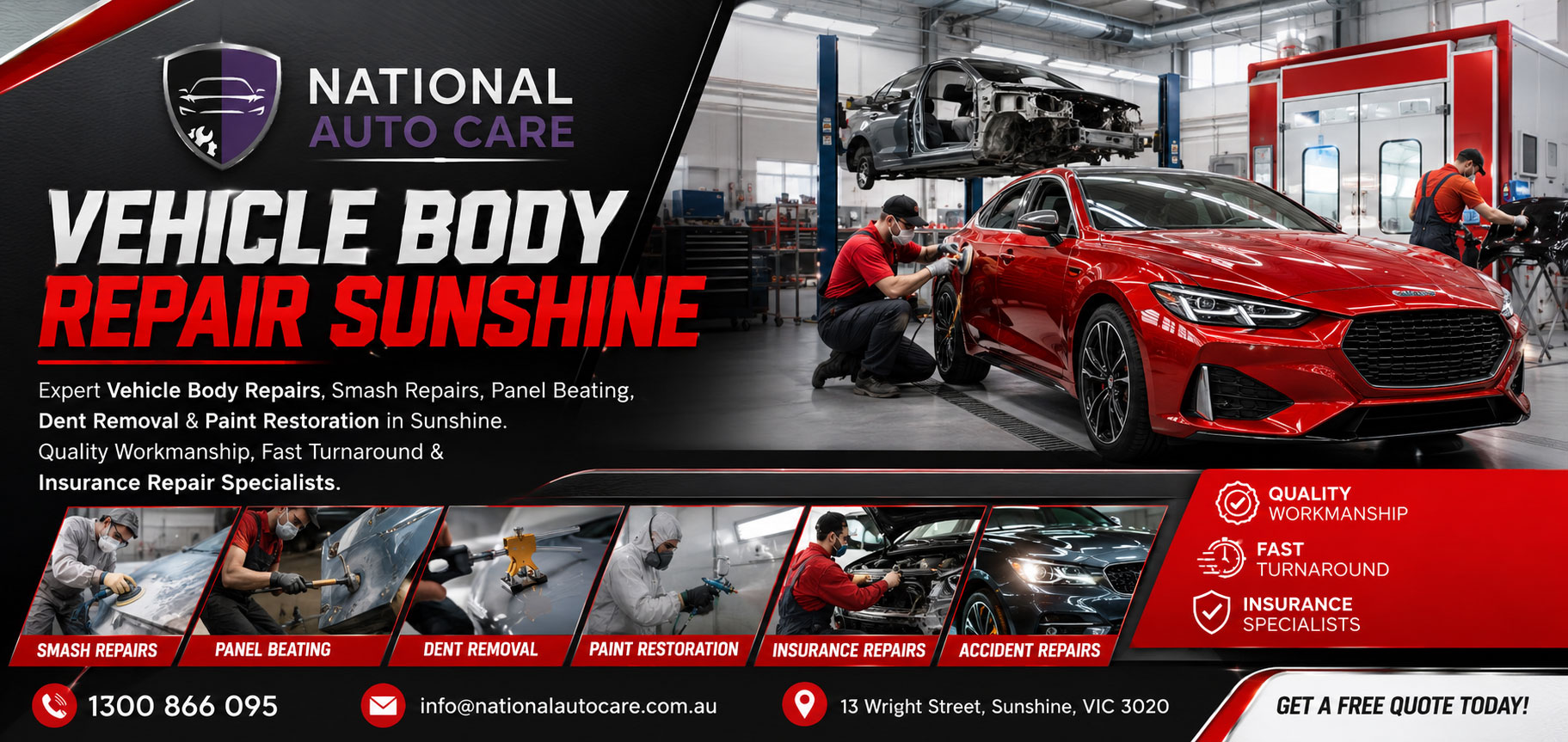
At National Auto Care, we’ve built our reputation in Sunshine on exactly that approach — honest assessments, quality repairs, and vehicles returned looking the way they should. If you need reliable Vehicle Body Repair Sunshine support, our team at 13 Wright Street, Sunshine VIC 3020 is ready to help.
📞 Call 1300 866 095 or email info@nationalautocare.com.au for a free, no-obligation assessment.
The repair time depends on the extent of the damage and the availability of replacement parts. Minor bumper repairs usually take 1–2 days, while major structural repairs with panel replacement and paintwork often require 1–2 weeks. Ask your repairer for a realistic completion date rather than an optimistic estimate, as delayed parts often extend repair times.
A professionally repaired vehicle with quality workmanship, colour-matched paint, and documented service records usually retains its resale value. Poor-quality repairs, mismatched paint, or hidden structural damage can reduce your vehicle’s value. Keep all repair invoices and warranty documents to reassure future buyers.
Yes, in many cases you can choose your preferred repairer. Although your insurer may recommend one of their approved workshops, your policy may allow you to select a repair shop you trust. Review your insurance policy carefully before making a decision.
In most situations, Paintless Dent Repair (PDR) costs less because technicians avoid repainting, extensive preparation, and additional materials. However, PDR only works when the paint remains intact and the metal has not stretched. Ask your technician to explain why they recommend traditional repairs if PDR is not suitable.
Take clear photos of the damage from several angles, exchange contact and insurance details if another driver is involved, and avoid driving a vehicle with significant structural damage. Arrange a professional inspection as soon as possible because exposed metal and damaged paint can quickly develop rust, especially around wheel arches and door sills.
Ask the repair shop which parts they plan to install. A reputable workshop will clearly explain whether it uses OEM (Original Equipment Manufacturer) parts, aftermarket components, or a combination of both. Review your repair quote carefully to confirm that it lists every part and explains the differences before work begins.